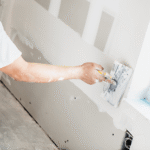
Water damage in drywall inside Colorado homes rarely starts as a visible problem. What you usually notice first is a stain or a slightly soft texture on the wall, maybe near a bathroom ceiling in places like Littleton or Lakewood. But honestly, that’s already late in the process. The moisture has usually been inside the drywall core for a while before it shows anything outside. What I’ve noticed on real job sites is that drywall doesn’t absorb water evenly. It spreads through seams, screw holes, and even behind paint layers in irregular directions. So the stain you see is just the “exit point” of a much larger internal spread, not the actual damage zone.
And this is where most homeowners get misled. They assume the visible area is the full issue, but the real condition often extends 1–3 feet beyond what you can see depending on how the framing is laid out. In Colorado specifically, the dry air makes people think walls dry quickly, but inside cavities it behaves differently because insulation slows evaporation. So the wall can look fine on day 3 but still be active inside on day 10. That delay is where hidden damage usually survives.
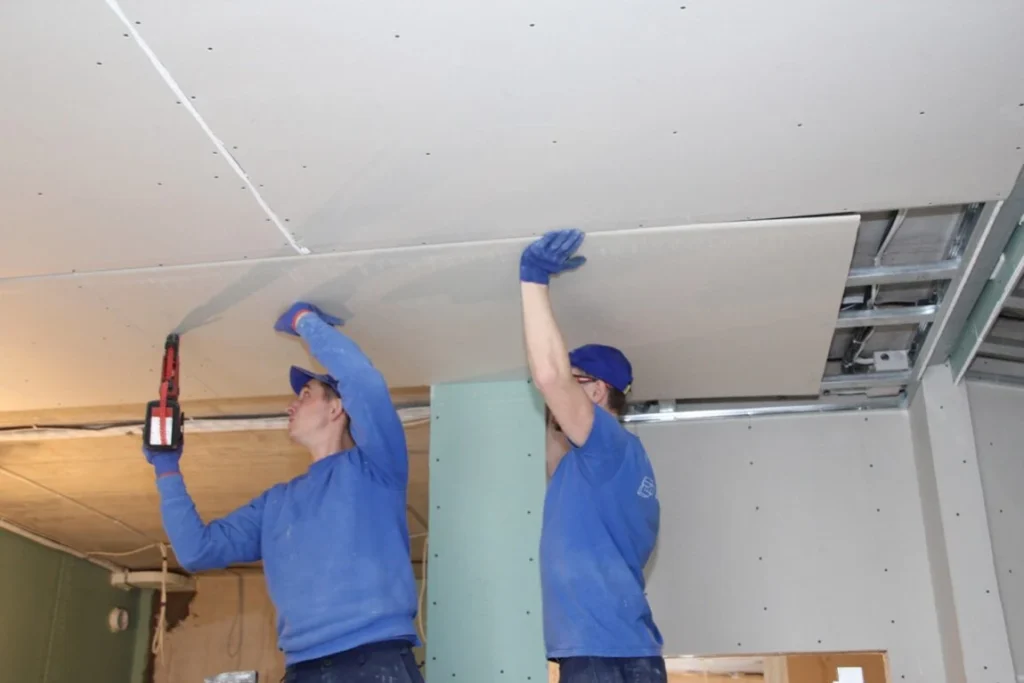
Wall Repairs Fail When Only Surface Is Fixed
This is something I’ve seen repeatedly in homes around Centennial and Highlands Ranch. A contractor comes in, cuts the stained section, patches it, paints it, job done. On paper it looks correct. But then a few weeks later, the same area starts bubbling or the paint shade changes slightly. Not dramatic at first, just enough that the homeowner notices something is off.
The issue is not the patch itself. The issue is the assumption that moisture spread is predictable. It isn’t. It follows the weakest internal path, not a visible boundary. So when only the stained area is removed, the hidden damp zones stay untouched behind the wall. Those zones continue reacting to temperature changes, especially during Colorado winters when indoor heating is running constantly and cold exterior walls create condensation cycles inside framing.
What most companies don’t check properly is whether the cavity behind the drywall is actually stable before closing it back up. That step gets skipped because it doesn’t show immediately in results, but it decides whether the repair holds for months or fails again.
Proper Drywall Repair Starts With Failure Analysis
When I approach water-damaged drywall, I don’t start with cutting. I start with feeling how the material behaves. That sounds simple, but it changes everything. Some areas feel soft but are still structurally usable. Some look fine but collapse when pressure is applied. So you can’t trust appearance alone.
What matters more is how far the gypsum has lost internal bonding. Once drywall absorbs moisture, it doesn’t just dry back to original strength. It weakens in layers. So when you open it up, you are not just removing wet material, you are tracing where structural integrity actually ends. And that line is never clean or straight. It shifts around framing, screws, and insulation pockets.
In real job conditions across Cherry Hills Village or Columbine, this step usually decides how big the repair actually becomes. Not what the stain looks like, but how the material responds when tested. That’s why experienced repairs sometimes look “bigger” than expected, because we’re following structure, not visuals.
Climate in Colorado Impacts Finished Repairs Over Time
One thing people underestimate is how much Colorado’s climate keeps affecting drywall even after repair. The air is dry, yes, but indoor heating creates constant expansion inside wall systems. Then at night, temperatures drop and the exterior walls cool down quickly. That back-and-forth creates micro movement inside drywall seams and framing.
If any moisture was left behind during repair, even a small amount, that cycle can reactivate it. I’ve seen this happen in homes in Lone Tree and Englewood where the repair looked perfect initially, but winter exposed faint lines or texture shifts that weren’t visible before. It doesn’t mean the repair was done poorly in execution. It usually means the internal conditions were not fully stabilized before closing the wall.
This is also why timing matters more than people think. A wall that is “almost dry” behaves very differently from a fully stabilized wall when seasonal shifts start. That difference only shows later.
Repair Isn’t Always the Right Choice for Drywall
This is the part most homeowners don’t hear honestly. Not every water-damaged drywall area is worth repairing. If gypsum has been through repeated moisture cycles, it loses its internal structure. You can still patch it, paint it, make it look fine for a short time, but it won’t behave like new material again.
What usually gives it away is repeat soft spots or paint issues returning in the same location. In older homes around Centennial or Ken Caryl, especially near plumbing walls or exterior corners, this is more common than people expect. The material looks intact but behaves unpredictably under finishing layers.
In those cases, full section replacement is not overkill. It’s actually the only way to reset the wall behavior back to stable conditions. Anything less just delays the same failure pattern.
Hire us for drywall installation and repair services.
We provide drywall installation and repair services in Littleton, Lakewood, Centennial, Highlands Ranch, Englewood, Greenwood Village, Columbine, Sheridan, Lone Tree, Cherry Hills Village, and Ken Caryl. If you want a company that provides high-quality services for you.
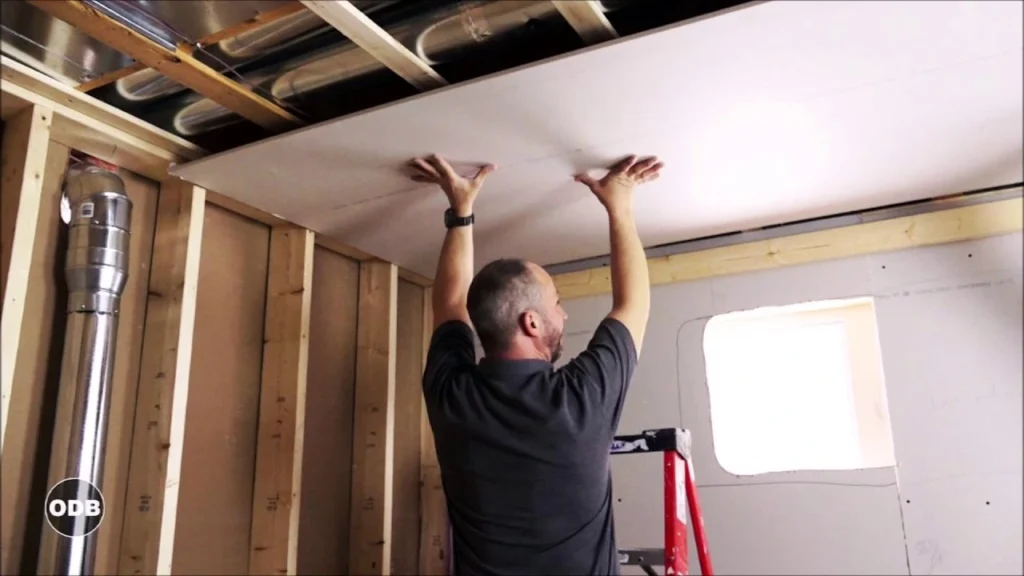
Drywall Repair Success Is About How Walls Perform Over Time
Most people judge repair success too early. Right after painting, everything looks perfect. Smooth surface, clean finish, no visible stain. But drywall doesn’t reveal its condition immediately. It reveals it after cycles of heat, cold, and humidity changes.
A proper repair is only confirmed when the wall stays stable over time. No seam reappearance, no texture shifts, no delayed staining. That’s the real indicator that internal moisture was fully resolved and the material is behaving normally again.
And honestly, that’s the difference between a quick fix and a real repair. One looks good immediately. The other stays good after months of Colorado weather doing its normal cycle.