Drywall repair usually looks simple until you actually start working on it. From the outside it feels like a small surface issue, a hole or a crack that just needs to be filled and finished. But on site, that assumption changes quickly once the wall is physically checked. Some areas behave stable, some do not, and that difference decides everything about how the repair will go. Honestly, I have seen very small damage turn into a more complicated repair just because the surrounding wall wasn’t stable. And I have also seen larger damage repaired cleanly because the structure behind it was still holding properly. So the real starting point is never the visible damage. It is how the wall is responding when you actually touch and test it.
Our journey in the drywall industry started with a simple observation that most property owners are tired of quick fixes that crack open a few months later. Drywall restoration is not just about slapping some plaster over a hole and hoping it stays flat.
It is a highly demanding trade that combines structural physics with artistic surface matching. Our company was founded on the principle of delivering structural longevity alongside flawless visual aesthetics, treating every single wall assembly as a critical component of your property value.
Over the years, we have refined our processes to move completely away from standard handyman methods, focusing instead on deep substrate engineering and precise chemical bonding.
We approach every residential and commercial project with a dedicated diagnostic mindset. Our team does not just arrive with a bucket of joint compound; we bring specialized moisture diagnostic meters, structural wall testing instruments, and deep technical knowledge.
We understand that your home is a dynamic environment that shifts with seasonal temperatures, humidity variations, and foundation settlement. By recognizing how these forces affect standard sheetrock panels, our service transforms what used to be a frustrating, recurring maintenance problem into a permanent, stress-free resolution.
We take great pride in restoring your living spaces so perfectly that you will completely forget where the original damage even occurred.
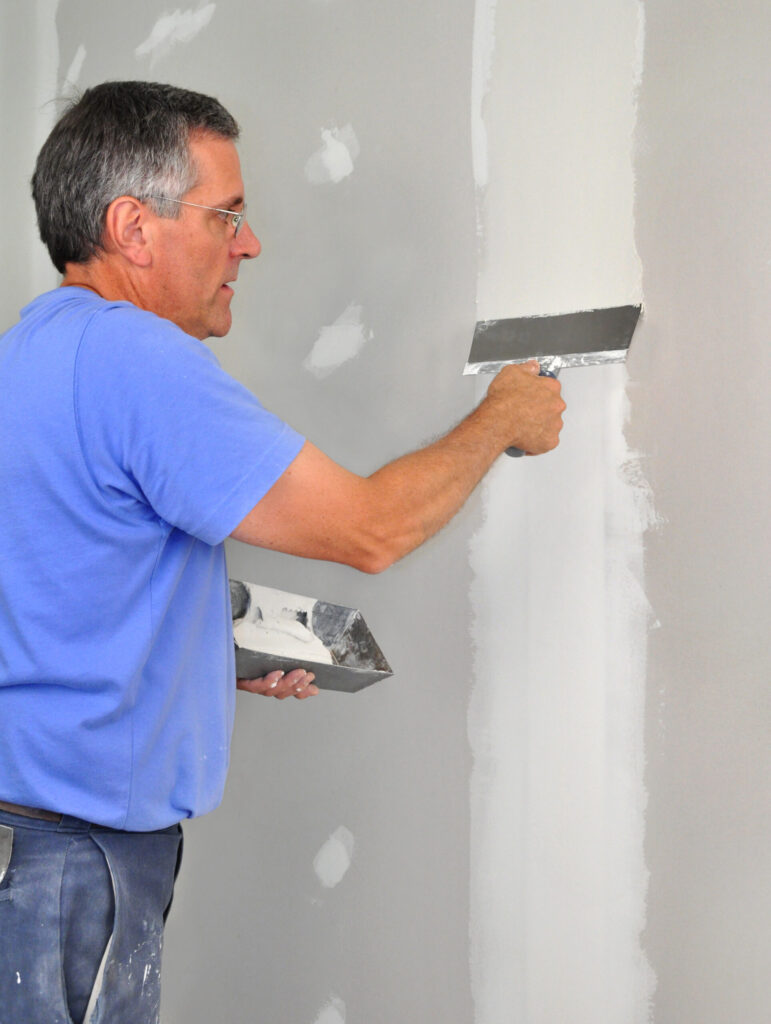
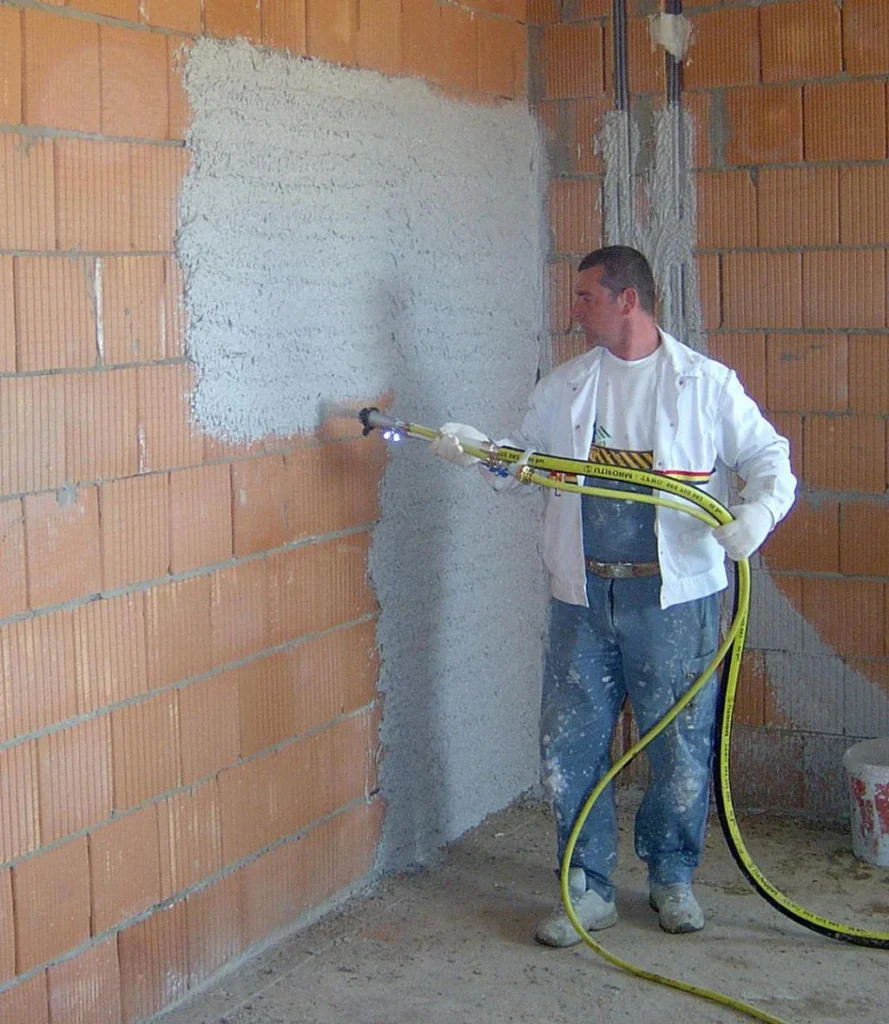
Property owners choose our service over standard handymen because we enforce a rigorous diagnostic protocol before any repair work begins. While most contractors simply slap basic tape over a crack, our technicians analyze the underlying framing and measure moisture levels to identify the actual root cause of the failure. This scientific approach ensures we never apply a temporary patch over an active structural shift, giving you a stable, engineered fix that protects your property value for years to come.
Achieving an invisible repair demands a high level of finishing skill that standard painters or general workers rarely possess. Angular sunlight easily exposes bad sanding, uneven planes, or differential paint absorption around patched areas. We solve this by using specialized multi-coat feathering and texture-matching techniques that blend the repair zone seamlessly into the surrounding wall profile. Whether your surface is smooth, orange peel, or knockdown, our process guarantees a flawless finish under any lighting condition.
We completely reject cheap retail spackles that shrink and crack, relying instead on commercial-grade polymer-modified setting compounds and high-tensile joint tapes. These premium materials create a permanent chemical bond with your existing sheetrock core rather than just sitting loosely inside the damage zone. By investing in our service, you receive structural elasticity and depth of repair that effortlessly resists building vibrations and seasonal temperature changes without pulling away.
Our team also addresses the common mess associated with drywall dust by implementing heavy-duty containment systems and active vacuum-assisted sanding tools. We completely seal off the work zone before cutting or sanding, protecting your furniture, carpets, and internal air quality from hazardous airborne particles. Once the structural restoration is finished, we perform a thorough cleanup, leaving your living space pristine, safe, and free of any white residue.
A crack or hole in drywall is only the surface signal of something happening behind it. What most people see is the end result, not the cause. In real work, the cause can be framing movement, weak joint bonding from original installation, or moisture slowly changing the material strength over time.
This internal strain means that a simple cosmetic application will never be a permanent solution if the background foundation is still moving. What makes this interesting is that two identical cracks can come from completely different conditions.
One might stay stable after repair, while the other keeps coming back even after multiple fixes. That is where professional experience matters, because surface appearance does not tell you how the internal structure is behaving.
When we inspect a site, we look deep into these factors to choose the exact compound and chemical binding strategy needed for your specific wall.
So repair decisions are never made just by looking at damage. They are made by understanding what is still active behind the surface and what has already stabilized.
Our team specializes in identifying these hidden patterns so that you do not have to pay for the same repair twice.
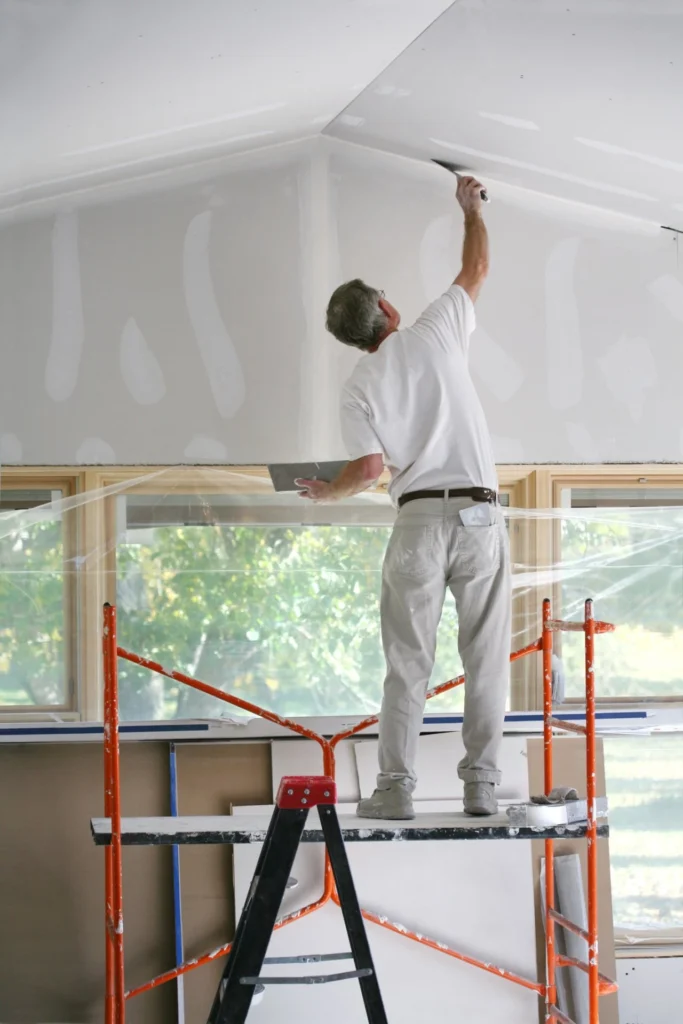
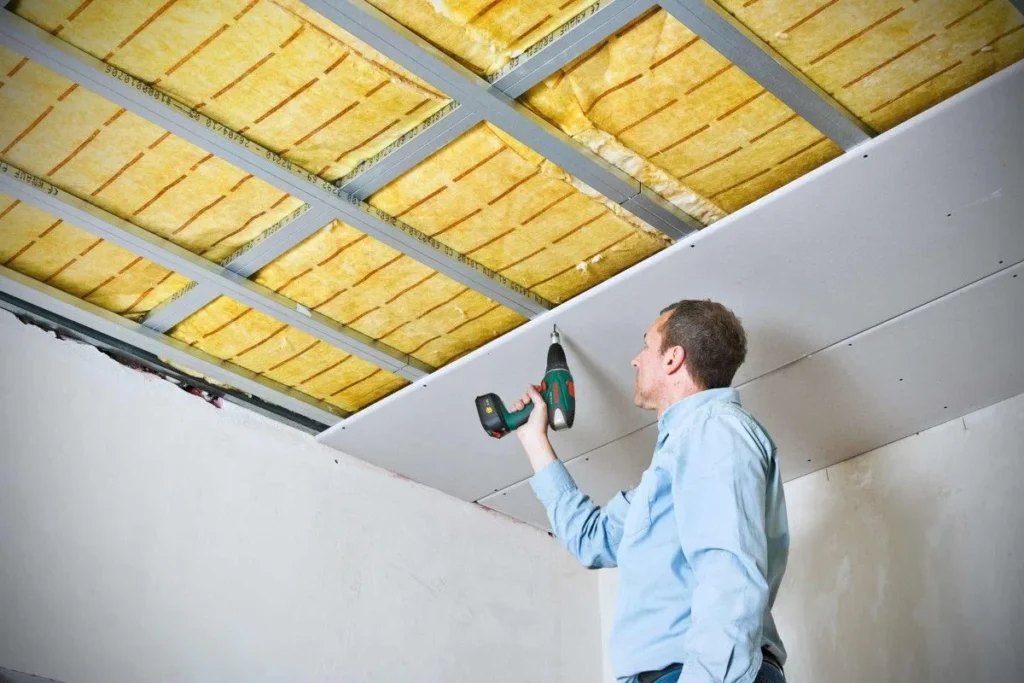
Before any repair starts, the first step is not fixing anything. It is checking how the wall behaves around the damaged area. This is where most of the real decision-making happens, allowing us to build a strategic plan rather than just applying a temporary patch.
If you press lightly around a crack and the surface shifts slightly, that already tells you the wall is not fully stable. If edges crumble easily when touched, that usually indicates weakened material strength rather than just a surface defect. If there is any sign of moisture softness, even without visible staining, that changes the entire repair approach instantly.
To be clear, skipping this part is where most poor drywall repairs come from. Because once you start patching without understanding the base condition, you are basically working blind. And drywall does not forgive blind work. It shows it later through visible lines, repeated cracks, or uneven finishing. We use precise manual diagnostic checks and specialized instruments to measure wall stability before applying any professional compound.
Small repairs look easy, and that is exactly why they are often done too quickly. Nail holes, screw marks, and small dents seem like instant fixes, but they behave differently after paint depending on how the surface was prepared. Many DIY fixes use cheap retail spackle which shrink significantly over time and create a dimple on your pristine wall.
What usually happens in real cases is that the hole gets filled, sanded, and painted, and everything looks fine at first. Then after some time, especially under natural light, a slight shadow or ring becomes visible around the patched area. People usually think the material failed, but that is not really what happened.
The issue is surface leveling and absorption difference between the repaired spot and surrounding wall. Drywall and paint do not behave uniformly unless the transition is properly blended. We solve this by using premium setting compounds mixed with specialized polymers that prevent flashing, ensuring that your small repairs blend perfectly into the background.
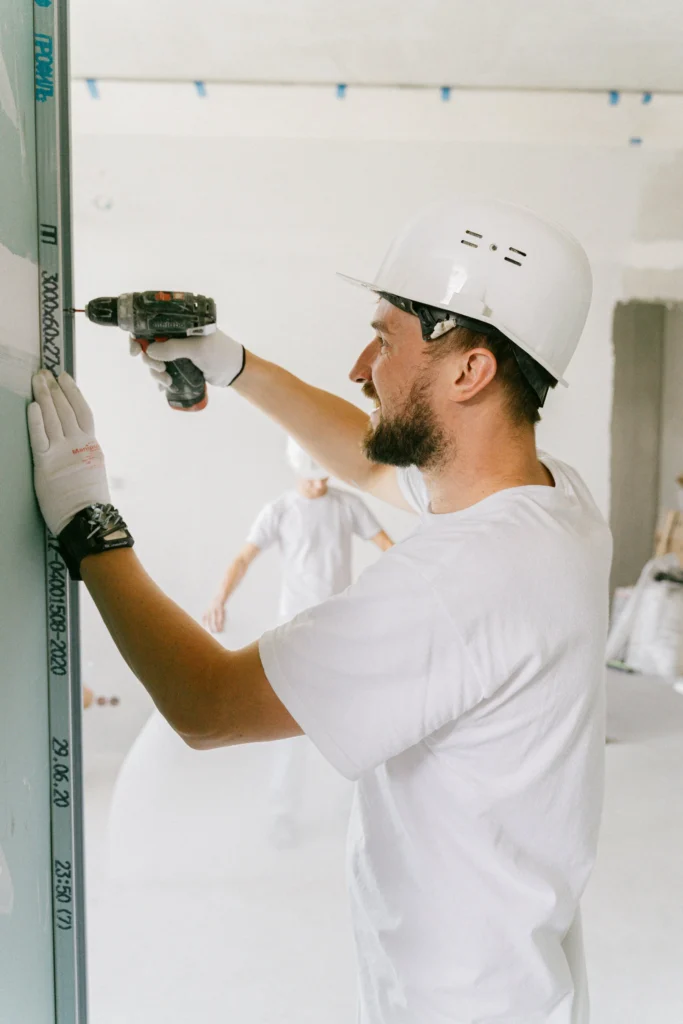
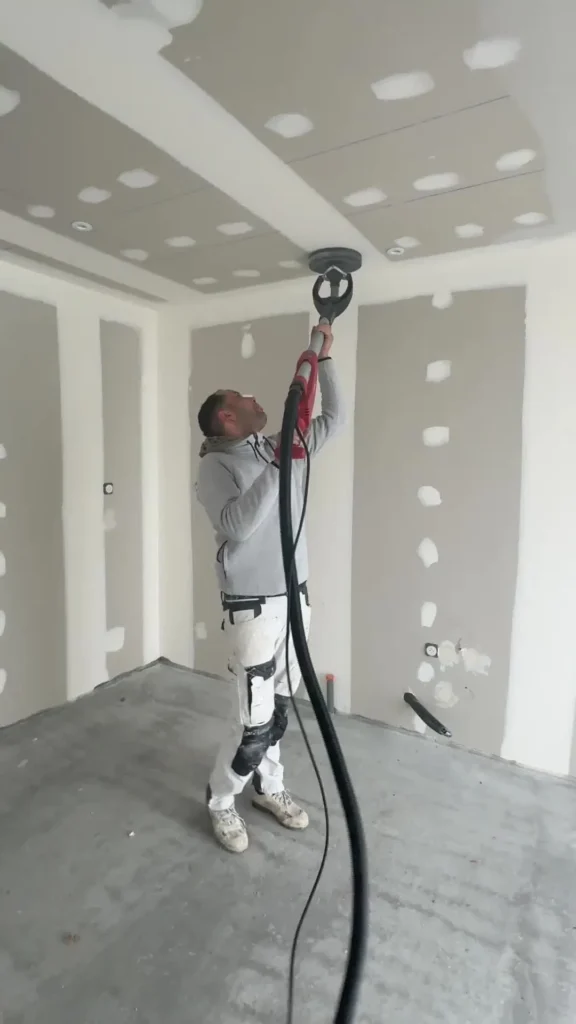
Medium damage is where drywall work starts to show real skill differences. At this stage, the repair is no longer just about filling a hole. It becomes about integrating a new section into an existing surface that already has its own behavior and history.
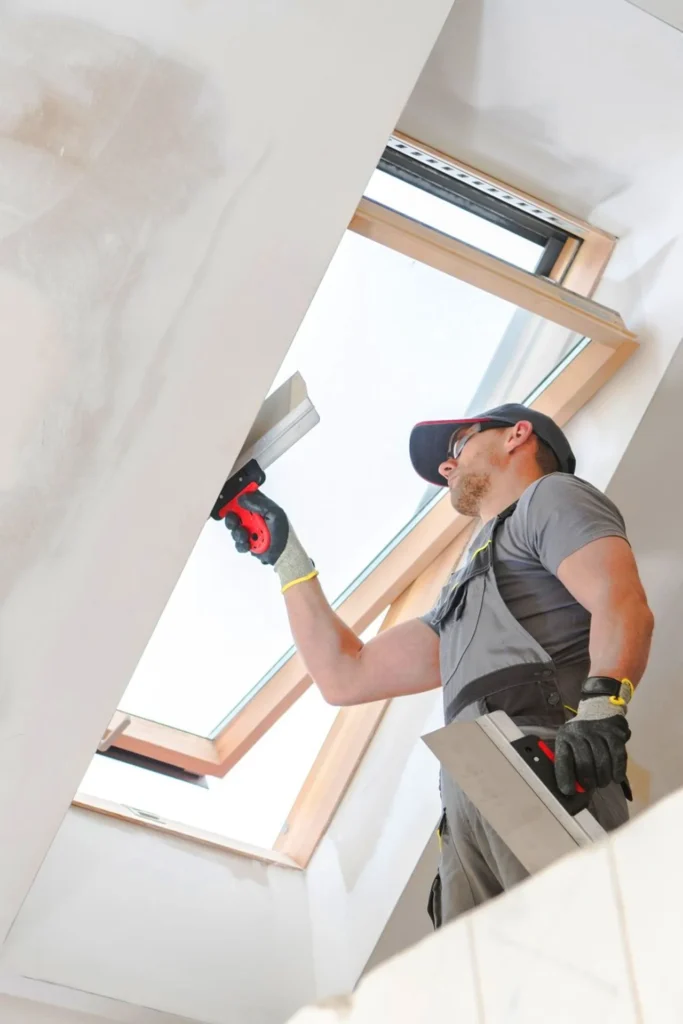
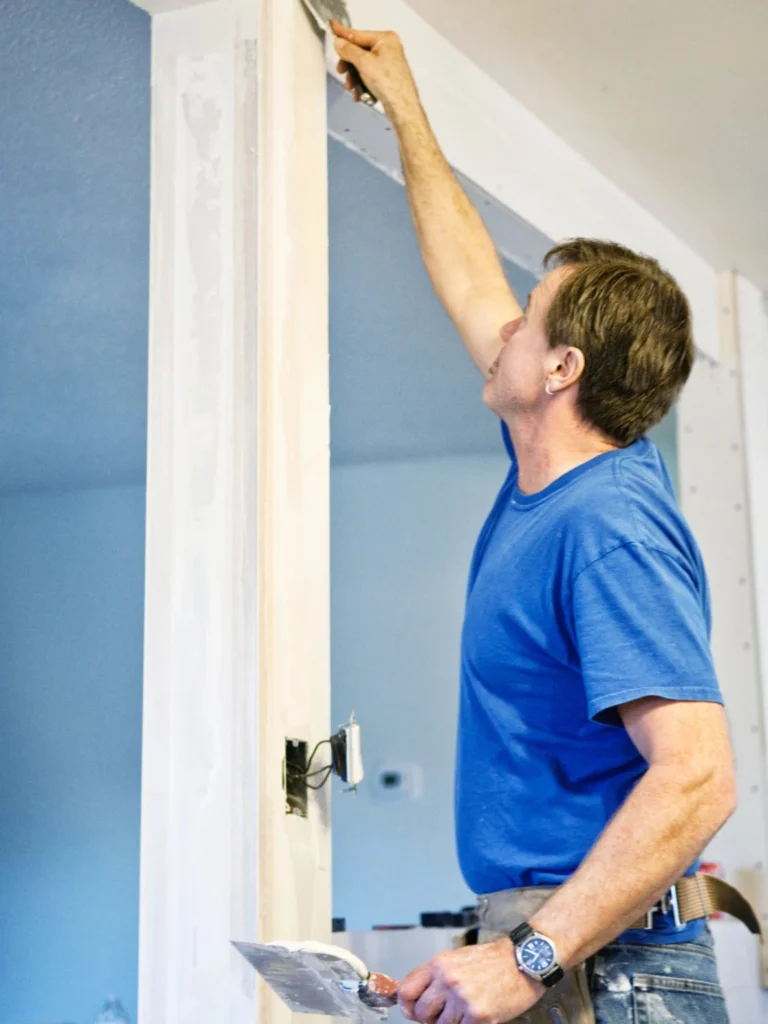
When a patch is installed, the first challenge is alignment with the framing behind it. If the patch is even slightly uneven, it affects how compound layers settle later. Then comes taping and layering, which looks simple but depends heavily on consistency of application. We use structural backing techniques such as installing wooden support cleats behind the cut area to make sure the new patch matches the exact plane of the existing wall.
One thing that is often missed is how different areas of the same wall absorb compound differently. That means even if everything is applied correctly, the drying and finishing behavior can still vary across the surface. That variation is what creates visible repair outlines later if not controlled properly by an expert technician who understands absorption dynamics.
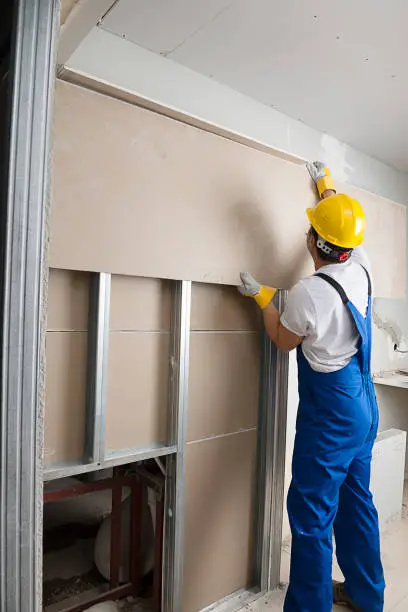
When damage is large enough, repair becomes section replacement. At that point, the drywall is removed completely and the framing behind it becomes part of the intensive inspection process.
This is where experience becomes important, because the visible damage is no longer the main issue. The real question becomes why that section failed in the first place.
If that cause is not identified, even a perfect replacement can fail again in the same way. Our comprehensive replacement methodology addresses everything from checking the stud alignment to ensuring the correct fastener schedule is used.
In real conditions, repeated failure often comes from unresolved moisture, weak framing contact, or movement in the structure that was never corrected.
So replacement is not just installation work. It is a correction of the condition that caused the failure. We replace damaged areas with correct high grade materials such as moisture resistant panels where needed, guaranteeing lifelong durability.
Moisture changes drywall behavior in a way that is not always visible immediately. A wall can look normal on the surface but still have reduced internal strength. That is where mistakes usually happen, because repair gets started too early.
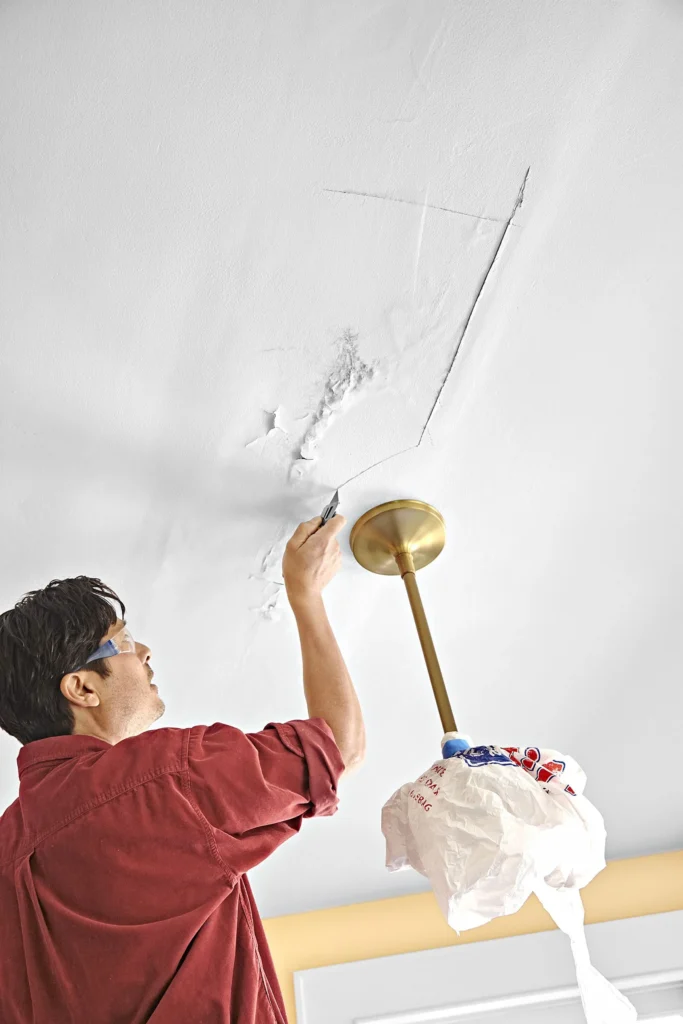
If moisture is still active inside the material, any patch or replacement will eventually lose bonding strength. It may look fine for a short period, but later it can bubble, crack, or separate entirely. This ruins your investment and creates a breeding ground for mold behind your living spaces.
So the key factor in moisture related repair is not just replacing material. It is confirming stability before any finishing begins. Without that, the repair is temporary even if it looks correct at the start. Our team utilizes specialized moisture evaluation tools to check that the structure is completely dry and safe before we apply our final finish coats.
Cracks are one of the most repeated drywall issues, and also one of the most misunderstood. A crack is not always a surface problem. In many cases, it reflects movement happening behind the wall or at the joint seams where structural shifts occur.
Surface cracks may stay stable after filling, but movement based cracks behave differently. They reopen over time because the structure is still shifting slightly due to seasonal temperature changes or foundation settling. That is why the same crack can come back even after multiple repairs if you just use basic wall putty.
So the real decision in crack repair is not how to fill it, but whether the wall is still active or already stable. We use high strength fiberglass mesh and flexible joint tape configurations that absorb these microscopic movements, giving your walls the elasticity they need to stay beautiful and crack free for years.
Here are some questions and answers about Red Rocks that clients ask me most of the time. Here, I am adding them for you so you can get all the answers from them.
This usually happens because the surface absorption and leveling were not fully matched with the surrounding wall texture, which creates visible contrast under light. Standard drywall compound is highly porous and drinks paint faster than an old wall, so without proper sealing primers and texture feathering, a visible ghost ring will always appear.
In most cases, the reason is ongoing structural movement or instability behind the wall, which keeps the crack active even after surface repair. This is not a material issue but a condition issue that requires high tensile strength structural tapes and deep anchoring to fix properly rather than just surface spackling.
The answer depends entirely on depth, size, and structural condition of the panel. Minor surface damage can often be repaired directly with advanced compound layering, but deeper punctures or areas weakened by structural moisture require clean section removal and rebuilding with new backer framing to maintain safety.
Repair time depends heavily on drying cycles, the number of required compound layers, and the condition of the wall before repair starts. Some repairs look quick but actually require longer stabilization and chemical curing time between coats to ensure proper bonding and eliminate structural shrinkage later.
The most important factor in long lasting repair is not just the patch itself, but how stable the wall is during and after the repair process. Without establishing substrate stability and executing proper surface blending, even technically correct work can fail over time, which is why choosing a certified specialist is crucial.
Call or email us to book your free, no-obligation assessment. We’ll inspect the damage and provide a clear, upfront quote.
Our expert drywallers arrive on time, prep the area, and perform precise, high-quality repairs—keeping your space clean throughout.
We sand, smooth, and (if requested) paint the surface to match your existing wall—leaving no trace behind.
Red Rocks Drywall is a trusted drywall company based in Colorado, specializing in expert installation and repair services. We’re committed to delivering quality workmanship, timely service, and lasting results for homes and businesses alike.